
Which Fabrics Are Best for Your Body?
Choosing between cotton, linen, and wool is more than a style decision—it is about how your clothing interacts with your body, skin, and environment. Each of these natural fibers carries unique properties that affect breathability, moisture control, temperature regulation, and overall comfort. Understanding these differences can help you choose fabrics that support your lifestyle, whether you prioritize softness, cooling, warmth, or sustainability.
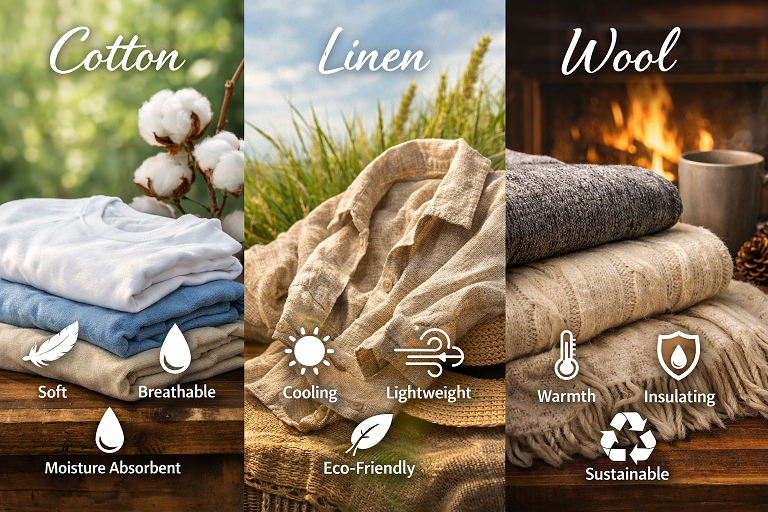
Cotton is one of the most widely used natural fabrics in the world, valued for its softness, breathability, and versatility. It is made from the fluffy fibers surrounding cotton plant seeds and is especially gentle on sensitive skin. Cotton absorbs moisture well, which helps keep the body comfortable in moderate temperatures. However, it can retain dampness, making it less ideal for high-intensity heat or very humid conditions where quick drying is important. Organic cotton options are often preferred for those seeking a more eco-conscious wardrobe choice.
Linen, derived from the flax plant, is prized for its exceptional breathability and cooling properties. It is one of the oldest known textiles and is especially popular in warm climates due to its ability to wick moisture and allow air to circulate freely. Linen fibers are stronger than cotton but tend to feel crisp or textured at first, softening over time with wear and washing. Its natural temperature-regulating qualities make it a top choice for hot weather clothing, though it wrinkles easily, which is often embraced as part of its relaxed aesthetic.
Women’s 2 Piece Linen Outfit
Fabric:The linen fabric is breathable, comfortable and soft to wear.

Wool is a protein-based fiber sourced primarily from sheep, known for its exceptional insulation properties. Unlike cotton and linen, wool excels at trapping heat, making it ideal for cold climates and winter layering. It can also regulate temperature by absorbing moisture without feeling wet, which helps maintain comfort across changing conditions. Modern wool fabrics, such as merino wool, are softer and less itchy than traditional varieties, making them suitable even for sensitive skin when properly processed.
Choosing the best fabric for your body depends on climate, activity level, and skin sensitivity. Cotton is excellent for everyday wear and breathability in mild weather, while linen is superior for hot, humid environments where airflow is essential. Wool, on the other hand, is unmatched for insulation and cold-weather comfort. For people with sensitive skin, finely woven cotton or merino wool often provides the most balanced comfort. Blending these fabrics in a wardrobe allows for adaptability across seasons and activities.
When evaluating cotton, linen, and wool through the lens of body compatibility, it helps to consider how each fiber interacts with skin biology and daily movement. Cotton’s smooth cellulose structure makes it generally hypoallergenic and suitable for most skin types, especially those prone to irritation. Linen, with its looser weave and slightly rougher texture, encourages airflow and reduces the likelihood of heat rash, making it beneficial for people living in warm or tropical climates. Wool, despite its reputation for itchiness, contains natural lanolin and crimped fibers that create insulating air pockets, supporting both warmth and breathability when chosen in fine grades.
Another important factor is sustainability and longevity. Linen requires fewer pesticides and less irrigation than cotton, making it one of the more environmentally efficient textiles. Cotton varies widely depending on cultivation methods, with conventional cotton having a higher environmental footprint than organic or regenerative alternatives. Wool is renewable and biodegradable, though ethical sourcing practices vary by region and farming method.
From a care perspective, cotton is easy to wash and maintain, linen improves with age but wrinkles easily, and wool requires more delicate handling but rewards users with durability and long lifespan. Ultimately, the best fabric is not universal but contextual, shaped by your climate, sensitivity, and lifestyle needs.
At Still Alchemy, we view clothing as more than material covering—it is a daily ritual of connection between body, environment, and intention. Our philosophy centers on the idea that natural fibers like cotton, linen, and wool are not just fabrics but living expressions of nature’s intelligence. Each textile carries its own energetic signature: cotton as softness and accessibility, linen as clarity and breathability, and wool as protection and grounding.
We explore how what you wear can influence how you feel, move, and experience the world. By understanding fabric at a deeper level, you can begin to curate a wardrobe that aligns with both physical comfort and mindful living. Still Alchemy is rooted in the belief that transformation begins with awareness, and even something as simple as choosing a shirt becomes an act of alignment with nature’s rhythms.
Our approach encourages thoughtful selection over excess, favoring quality, longevity, and harmony with the body. Through education and exploration, we aim to bridge ancient textile wisdom with modern lifestyle needs, helping individuals reconnect with materials that support both well-being and environmental balance.
Ultimately, cotton, linen, and wool each serve a distinct purpose in supporting the human body. There is no single best fabric, only the best fabric for your specific needs, climate, and sensitivity. Cotton offers comfort and familiarity, linen provides breathability and ease in heat, and wool delivers unmatched warmth and resilience. When chosen intentionally, these natural fibers can enhance not only physical comfort but also your overall sense of well-being. Building awareness of how textiles interact with your body allows you to make more conscious choices that support both personal health and environmental responsibility. In this way, clothing becomes part of a larger practice of mindful living and thoughtful consumption in everyday modern life.
You must be logged in to post a comment.