
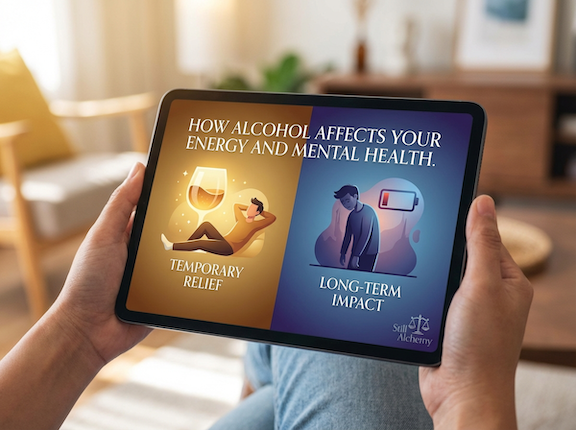
Alcohol is often associated with relaxation, social connection, and temporary relief from stress. Yet beneath its short-term effects lies a complex relationship with both physical energy and mental health. Understanding how alcohol interacts with the body and mind is essential for anyone seeking balance, clarity, and long-term wellbeing. At Still Alchemy, the focus is on intentional living and mindful choices, and examining alcohol’s true impact is a key part of that journey.
Alcohol and Your Body’s Energy Systems
At first glance, alcohol may seem like it provides energy. After all, it contains calories—7 per gram, nearly as much as fat. However, these are “empty calories,” meaning they lack essential nutrients like vitamins, minerals, and protein. Instead of fueling the body efficiently, alcohol disrupts the body’s natural energy production processes.
When alcohol enters the bloodstream, the liver prioritizes breaking it down over other metabolic functions. This means that nutrients from food are not processed as effectively, leading to reduced energy availability. Blood sugar levels can fluctuate, often dropping after drinking, which contributes to feelings of fatigue, irritability, and weakness.
Additionally, alcohol interferes with mitochondrial function—the part of cells responsible for producing energy. Over time, this can lead to chronic tiredness and a general sense of low vitality, even in individuals who consume alcohol moderately.
The Sleep Disruption Factor
One of the most significant ways alcohol drains energy is through its impact on sleep. While it may help you fall asleep faster, alcohol severely disrupts sleep quality. It reduces REM sleep, the restorative stage crucial for memory, emotional processing, and cognitive function.
As the body metabolizes alcohol during the night, it can cause frequent awakenings, night sweats, and dehydration. The result is fragmented, non-restorative sleep. Even if you spend a full eight hours in bed, the quality of that sleep is compromised.
This creates a cycle: poor sleep leads to low energy the next day, which may increase reliance on stimulants like caffeine—or even more alcohol to unwind again. Over time, this pattern can significantly affect both physical stamina and mental clarity.
Alcohol’s Impact on Brain Chemistry
Alcohol is a depressant that affects neurotransmitters in the brain. It increases the activity of GABA, a chemical that slows brain activity, creating a sense of calm or sedation. At the same time, it reduces glutamate, which is responsible for excitatory signaling.
Initially, this combination can feel relaxing. However, the brain works to maintain balance. After alcohol wears off, there is a rebound effect where anxiety and restlessness can increase. This is why many people experience “hangxiety”—heightened anxiety following drinking.
Alcohol also impacts dopamine, the neurotransmitter associated with pleasure and reward. While drinking may temporarily boost dopamine levels, repeated use can lead to reduced sensitivity. Over time, this can make everyday activities feel less enjoyable, contributing to low mood and lack of motivation.
Short-Term Mental Health Effects
Even occasional drinking can have noticeable effects on mental health. In the short term, alcohol can impair judgment, reduce inhibitions, and alter emotional responses. While this may sometimes lead to positive social experiences, it can also increase impulsivity, aggression, or emotional volatility.
Many people report feeling more anxious or depressed the day after drinking. This is partly due to chemical imbalances in the brain, as well as physical factors like dehydration and poor sleep. Cognitive functions such as focus, memory, and decision-making are also temporarily impaired.
Long-Term Mental Health Consequences
Chronic alcohol use is strongly linked to mental health disorders, including depression and anxiety. While some individuals use alcohol to cope with stress or emotional pain, it often worsens these conditions over time.
Alcohol can change brain structure and function, particularly in areas related to mood regulation and executive functioning. Long-term use may lead to persistent feelings of sadness, reduced resilience to stress, and difficulty managing emotions.
There is also a strong connection between alcohol use and burnout. When energy levels are consistently low and mental clarity is compromised, it becomes harder to maintain productivity, relationships, and a sense of purpose.
The Mind-Body Connection
Energy and mental health are deeply interconnected. When alcohol disrupts physical energy—through poor sleep, nutrient depletion, and metabolic interference—it directly affects emotional and cognitive wellbeing.
Fatigue makes it harder to regulate emotions, stay motivated, and engage fully in daily life. At the same time, mental health challenges can increase the likelihood of using alcohol as a coping mechanism. This creates a feedback loop that can be difficult to break without awareness and intentional change.
Hydration and Nutrient Depletion
Alcohol is a diuretic, meaning it increases urine production and leads to dehydration. Even mild dehydration can cause fatigue, headaches, and difficulty concentrating. Additionally, alcohol depletes essential nutrients such as B vitamins, magnesium, and zinc—all of which play a role in energy production and brain health.
Over time, these deficiencies can contribute to chronic tiredness, mood imbalances, and weakened immune function. Replenishing these nutrients is important, but reducing alcohol intake is often necessary to fully restore balance.
A More Conscious Approach
Reducing or eliminating alcohol can lead to noticeable improvements in both energy and mental health. Many people report better sleep, increased focus, improved mood, and greater emotional stability within weeks of cutting back.
At Still Alchemy, the philosophy centers on transformation through awareness. Choosing to evaluate your relationship with alcohol is not about restriction—it is about alignment. It is about understanding what truly supports your energy, your clarity, and your sense of self.
This approach encourages curiosity rather than judgment. How does alcohol make you feel the next day? Does it support your goals, or does it subtly work against them? These questions can guide more intentional decisions.
About Still Alchemy and This Topic
Still Alchemy is rooted in the idea that true change happens in the quiet moments of reflection and intention. The name itself speaks to transformation without chaos—a steady, mindful evolution toward a more balanced life.
Exploring how alcohol affects energy and mental health aligns deeply with this philosophy. It is not about labeling alcohol as “good” or “bad,” but about understanding its effects and making choices that support your wellbeing.
By bringing awareness to these patterns, Still Alchemy aims to empower individuals to reclaim their energy, enhance their mental clarity, and cultivate a more grounded, intentional lifestyle.
Alcohol’s effects on energy and mental health are far-reaching. From disrupting sleep and depleting nutrients to altering brain chemistry and emotional balance, its impact extends beyond the moment of consumption.
While moderate drinking may feel manageable, even small amounts can influence how you feel physically and mentally. Understanding these effects allows you to make informed decisions that align with your goals and values.
True energy comes from nourishment, rest, and balance. True mental clarity comes from stability and awareness. By examining your relationship with alcohol, you open the door to a more energized, focused, and intentional life.
You must be logged in to post a comment.