
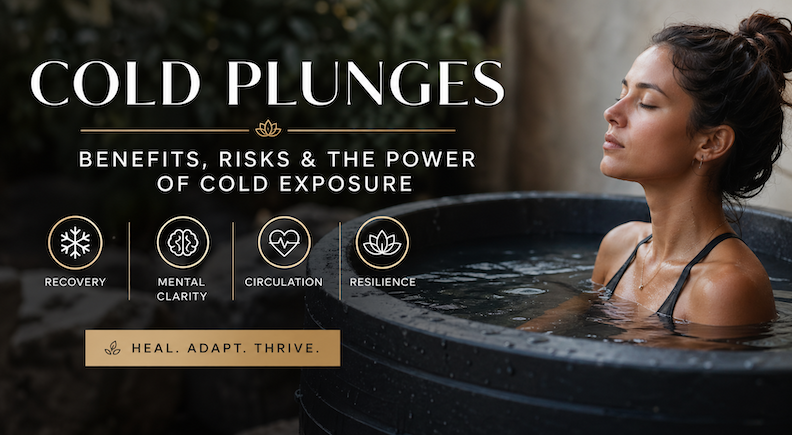
Benefits, Risks, and the Power of Cold Exposure
In a world filled with constant stimulation, noise, and stress, healing often begins in the most unexpected places — sometimes in the cold.
Cold plunges have become one of the most powerful modern wellness rituals, embraced by athletes, high performers, and those seeking deeper physical and mental restoration. But beyond the trend lies something more profound: a practice rooted in recovery, resilience, and nervous system regulation.
At Still Alchemy, wellness is about returning to your center — creating rituals that help the body release, the mind quiet, and the spirit realign. Cold exposure, when practiced intentionally, can become one of the most transformative tools for this journey.
What Is a Cold Plunge?
A cold plunge involves immersing the body in cold water for a short period of time, typically ranging between:
- 50–59°F (10–15°C) for beginners
- 40–50°F (4–10°C) for experienced users
- Lower temperatures for advanced cold exposure practitioners
This form of hydrotherapy is often referred to as cold water immersion or cold exposure therapy.
Unlike a quick cold shower, a cold plunge fully surrounds the body with cold water, creating a stronger physiological response. This sudden drop in temperature activates multiple systems in the body, including circulation, the nervous system, metabolism, and inflammatory pathways.
Cold plunges are widely used in athletic recovery, mental resilience training, stress adaptation, and holistic wellness practices. Research and wellness sources consistently note benefits related to recovery, focus, and mood when used properly.
The Science Behind Cold Exposure
When the body enters cold water, it immediately activates the sympathetic nervous system, often known as the “fight-or-flight” response.
This causes several rapid physiological reactions:
- Blood vessels constrict (vasoconstriction)
- Heart rate and breathing initially increase
- Norepinephrine and adrenaline levels rise
- Blood flow is redirected toward vital organs
- The body works to preserve core temperature
Once you exit the water, the body begins to warm again, and circulation increases significantly. This contrast between constriction and rewarming is believed to support recovery and circulation.
Cold exposure has also been associated with increased norepinephrine release, which may support alertness, focus, and mood regulation.
Benefits of Cold Plunges
1. Faster Muscle Recovery and Reduced Soreness
One of the most well-known benefits of cold plunging is post-workout recovery.
Cold water immersion can help reduce delayed onset muscle soreness (DOMS) by limiting inflammatory responses and decreasing tissue swelling after intense exercise.
This is why many professional athletes, runners, and fitness enthusiasts use cold plunges after training sessions.
The cold helps calm inflammation and may shorten recovery time between workouts.
2. Improved Circulation
The body’s vascular response to cold immersion is powerful.
During immersion, blood vessels constrict. After leaving the plunge, they dilate again, which may support improved circulation and oxygen delivery.
Over time, regular cold exposure may help train vascular responsiveness and improve circulatory efficiency.
3. Enhanced Mental Clarity and Focus
Many users describe cold plunging as a reset for the mind.
The immediate cold shock triggers heightened alertness, increased breathing awareness, and elevated norepinephrine levels.
This often leaves people feeling:
- mentally sharper
- more focused
- emotionally grounded
- deeply present
For many, the mental benefits are as significant as the physical ones.
4. Stress Resilience and Nervous System Training
Cold plunges are also a powerful resilience practice.
When you consciously remain calm in cold water, you are training the body to regulate its response to stress.
This teaches controlled breathing, emotional steadiness, and nervous system adaptability.
At Still Alchemy, this aligns beautifully with the philosophy of stillness through challenge — learning to remain centered even in discomfort.
5. Potential Metabolic Support
Cold exposure may activate brown adipose tissue (brown fat), which helps generate heat by burning calories.
While it is not a weight-loss solution on its own, some studies suggest regular cold exposure may support metabolic activity.
6. Better Sleep and Mood Support
Many people report deeper sleep after evening cold exposure sessions.
This may be linked to nervous system regulation and the calming parasympathetic rebound that follows the plunge.
Mood enhancement is also commonly reported, likely due to the release of norepinephrine, dopamine, and endorphin responses.
Risks and Important Safety Considerations
Cold plunges offer significant benefits, but they must be approached with awareness and care.
Cold Shock Response
The initial entry into cold water can cause:
- rapid breathing
- gasping
- elevated heart rate
- temporary blood pressure spikes
This can be dangerous if the user panics.
Cardiovascular Concerns
Individuals with:
- heart disease
- hypertension
- arrhythmias
- circulation disorders
should consult a medical professional before beginning cold exposure.
Because cold water causes blood vessel constriction and sudden cardiovascular stress, factual medical guidance is especially important.
Hypothermia Risk
Staying in too long increases the risk of hypothermia.
For most users, 2–5 minutes is sufficient, especially in colder temperatures.
More time does not always mean more benefit.
When to Avoid Cold Plunges
Avoid cold plunging if you have:
- fever or active illness
- uncontrolled blood pressure
- recent surgery unless medically cleared
- severe respiratory issues
- cold sensitivity disorders
How Long Should You Stay in a Cold Plunge?
General recommendations:
- Beginners: 1–2 minutes at 50–59°F
- Intermediate: 2–4 minutes
- Advanced: 4–6 minutes
Always prioritize how your body responds over pushing duration.
Consistency matters more than intensity.
Best Practices for Beginners
If you are new to cold plunging:
- Start at 55–59°F
- Begin with 60–90 seconds
- Focus on slow nasal breathing
- Keep shoulders submerged if comfortable
- Exit if dizziness or numbness occurs
The goal is adaptation, not endurance.
Cold Plunges and the Still Alchemy Philosophy
At Still Alchemy, wellness is more than performance.
It is a ritual.
It is presence.
It is the sacred return to self.
Cold plunging, when approached mindfully, becomes more than a recovery method. It becomes a practice of inner stillness.
The cold invites awareness.
It demands presence.
It strips away mental noise and brings you fully into the moment.
This mirrors the Still Alchemy mission of guiding people back to balance through intentional healing experiences, breath, and body-centered restoration. As the brand emphasizes returning to inner stillness through mindful wellness, cold exposure naturally complements that philosophy.
About Us: Still Alchemy and Transformative Wellness
Still Alchemy is rooted in the belief that healing happens when mind, body, and spirit are brought back into harmony.
Through restorative wellness practices, sound healing, movement, and intentional living, the space is designed to help people reconnect with themselves beneath life’s noise.
Cold exposure fits beautifully within this vision.
Like meditation, breathwork, and sound immersion, it creates a moment of profound presence — a place where stillness begins.
You must be logged in to post a comment.