
Benefits, Uses, and How It Supports the Body
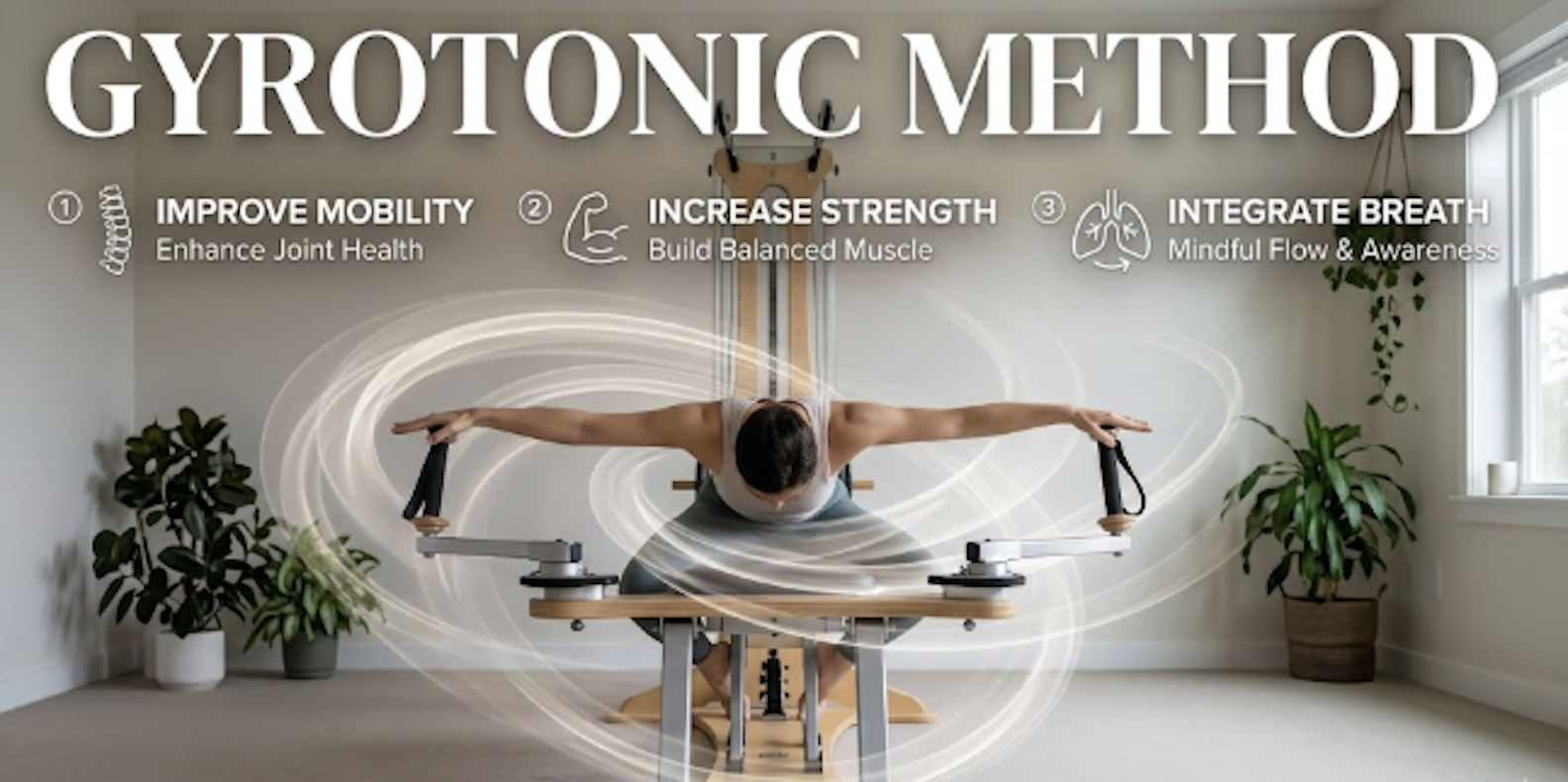
The Gyrotonic Method is a sophisticated movement system that blends strength, mobility, and breath into fluid, spiraling patterns. Developed by dancer Juliu Horvath, it uses specialized equipment to support the body as it explores three-dimensional motion. Unlike linear fitness approaches, Gyrotonic work emphasizes circularity, expansion, and continuous flow, helping practitioners feel both grounded and spacious in their bodies. It is often associated with mindful movement practices such as yoga and Pilates, yet it offers a unique emphasis on wave-like articulation through the spine and joints. This method is used for rehabilitation, athletic conditioning, and holistic well-being, making it accessible to a wide range of bodies and abilities.
What Is the Gyrotonic Method?
The Gyrotonic Method is a movement-based training system that focuses on circular, spiraling actions designed to open up the body’s natural pathways. Rather than isolating muscles, it encourages integrated movement patterns that engage multiple muscle groups at once. The system is performed on specialized equipment that provides adjustable resistance and support, allowing each movement to be both guided and expressive.
At its core, the method is built on the idea that the body moves best when it is free, coordinated, and expansive. Movements are continuous rather than segmented, creating a sense of flow that mirrors natural rhythms found in swimming, dancing, and even breathing. This approach helps practitioners develop greater awareness of how their body organizes itself in space.
Principles of the Gyrotonic Method
The foundation of Gyrotonic movement lies in three-dimensional motion, breath integration, and rhythmic sequencing. Instead of working in straight lines, the body spirals, arcs, and curves through space. This encourages joint decompression and supports spinal mobility.
Breath is another essential principle. Each movement is paired with intentional breathing patterns that help expand lung capacity and regulate the nervous system. This connection between breath and motion creates a meditative quality during practice.
Finally, sequencing ensures that movements flow seamlessly from one to the next. There are no abrupt stops, which helps build endurance, coordination, and body intelligence over time.
Benefits of the Gyrotonic Method
One of the most significant benefits of Gyrotonic training is improved mobility. The circular motions help release stiffness in the spine, hips, and shoulders, making movement feel more natural and effortless. This is especially helpful for individuals recovering from injury or dealing with chronic tension.
Strength is also developed in a balanced way. Instead of isolating specific muscles, the method strengthens entire kinetic chains, leading to more functional and sustainable muscle development. This reduces strain and supports long-term joint health.
Coordination and balance are enhanced as the body learns to move in multiple planes simultaneously. This translates into better posture, smoother movement, and improved athletic performance.
Additionally, the integration of breath promotes relaxation and reduces stress. Many practitioners report a sense of mental clarity and emotional grounding after sessions.
Uses of the Gyrotonic Method
The Gyrotonic Method is widely used in rehabilitation settings due to its gentle yet effective approach to movement re-education. Physical therapists and movement educators often incorporate it to support recovery from injuries, particularly those involving the spine or joints.
Athletes also use Gyrotonic training to improve performance, agility, and injury prevention. Dancers, in particular, benefit from its emphasis on fluidity and expressive movement.
Beyond clinical and athletic use, it is also practiced for general wellness. People seeking improved posture, stress relief, and overall body awareness find it especially beneficial.
How It Supports the Body
The Gyrotonic Method supports the body by encouraging optimal alignment and decompression of the joints. As movements spiral and expand, they create space within the body rather than compressing it. This can help reduce chronic tension patterns and improve circulation.
The spine, in particular, benefits from wave-like motion, which enhances flexibility and resilience. Over time, this leads to a more adaptable and responsive body that moves with ease in daily life.
It also supports the nervous system by promoting rhythmic breathing and mindful awareness. This combination helps shift the body out of stress states and into a more balanced, restorative mode.
Breath and Movement Integration
Breath is not separate from movement in the Gyrotonic Method; it is woven into every action. Inhaling often accompanies expansion and opening, while exhaling supports folding and release. This creates a natural rhythm that mirrors the body’s internal systems.
This integration helps regulate energy levels and supports deeper body awareness. Practitioners often find that their breath becomes more expansive and efficient both during and outside of practice.
Gyrotonic vs Yoga and Pilates
While Gyrotonic shares similarities with yoga and Pilates, it differs in its continuous, spiral-based movement patterns. Yoga often emphasizes static postures and flexibility, while Pilates focuses on controlled linear strengthening. Gyrotonic blends elements of both but adds a three-dimensional, flowing quality that sets it apart.
The use of specialized equipment also distinguishes it, offering adjustable resistance that supports deeper exploration of movement without strain.
Who It Is For
The Gyrotonic Method is suitable for nearly everyone, from beginners to advanced movers. It is especially beneficial for those recovering from injury, individuals seeking low-impact exercise, dancers, athletes, and anyone interested in mindful movement.
Because it can be adapted to different levels and needs, it offers a highly personalized approach to physical well-being.
About Us – Still Alchemy
At Still Alchemy, we explore the intersection of movement, breath, and embodied awareness. Our approach is rooted in the understanding that the body is not just something to train, but something to listen to, refine, and harmonize. Practices like the Gyrotonic Method align deeply with our philosophy of gentle transformation through mindful, intelligent movement.
We create space for individuals to reconnect with their natural rhythm, release stored tension, and cultivate a more fluid relationship with their physical form. Through guided sessions and intentional practices, we support a journey toward balance, presence, and embodied clarity.
The Gyrotonic Method offers a unique and holistic approach to movement that goes beyond traditional exercise. By integrating circular motion, breath awareness, and full-body coordination, it supports mobility, strength, and nervous system regulation. Whether used for rehabilitation, athletic enhancement, or general wellness, it provides a deeply restorative experience that helps the body move as it was naturally designed to—fluidly, efficiently, and with ease.
You must be logged in to post a comment.