
Morning & Night
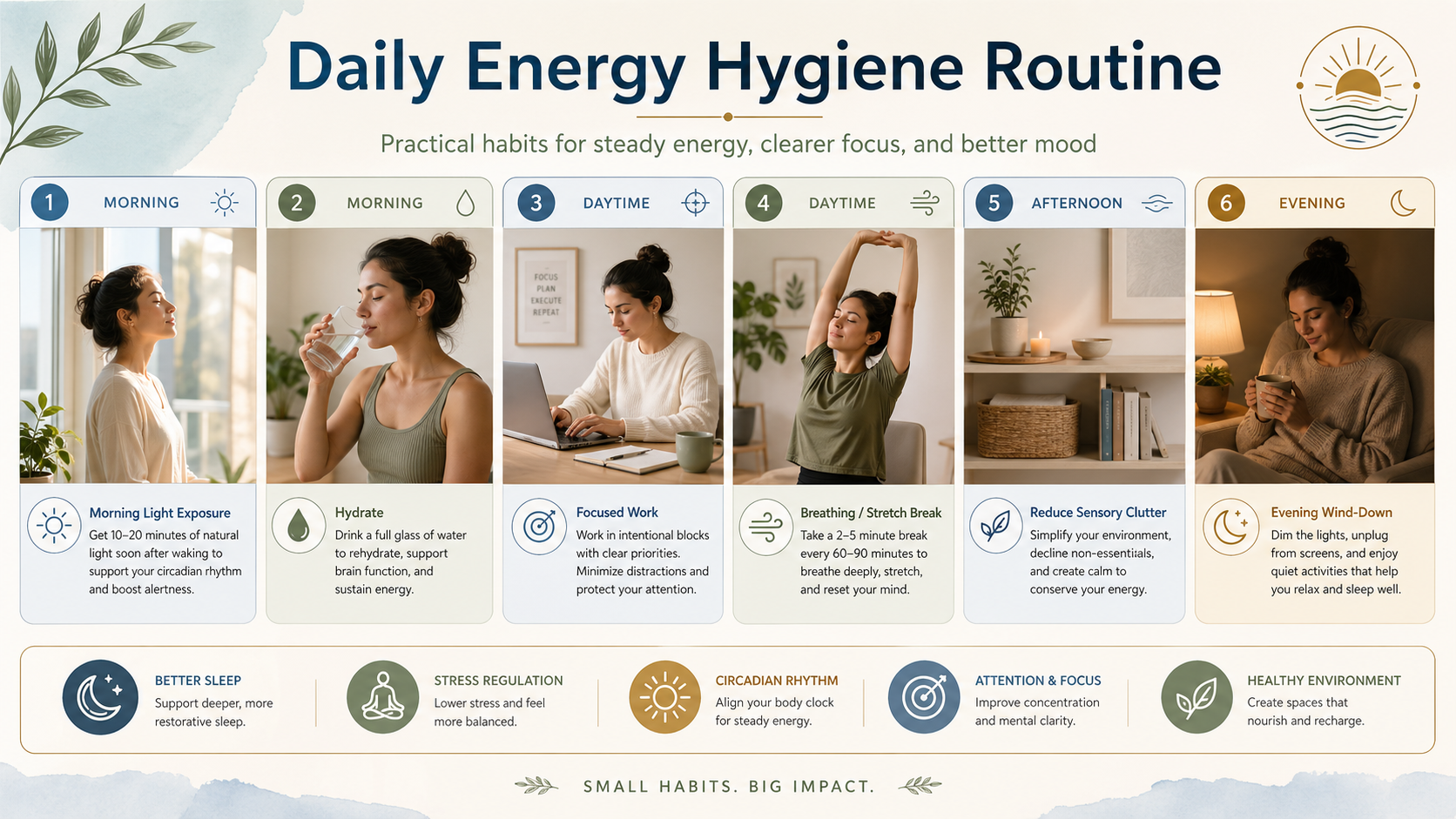
A “daily energy hygiene routine” is best understood as a structured set of mental, emotional, and environmental habits that support nervous system regulation, cognitive clarity, and stable mood throughout the day. While the term “energy” is often used loosely, the underlying mechanisms are well documented in physiology and psychology: circadian rhythm alignment, stress hormone regulation (especially cortisol), attentional control, sensory load management, and sleep quality all shape how energized or depleted a person feels.
Rather than relying on abstract concepts, this routine focuses on practical, evidence-informed behaviors that help the body and mind reset, recover, and maintain steady performance.
Morning Energy Hygiene Routine (30–75 minutes total)
The morning routine is designed to stabilize circadian rhythm, reduce stress reactivity, and prime cognitive focus.
1. Wake Consistently (Anchor the Circadian Rhythm)
Try to wake up within the same 30–60 minute window every day. This consistency helps regulate the body’s internal clock, which influences alertness, digestion, and hormone release.
Avoid immediately checking your phone, as sudden exposure to notifications and information overload can spike cortisol and fragment attention.
2. Light Exposure (5–15 minutes)
Natural light is one of the strongest signals for regulating circadian rhythm. Within the first hour of waking:
- Step outside if possible
- Or sit near a bright window
This exposure helps suppress melatonin and signals the brain that the day has begun, improving alertness later in the morning and supporting better sleep at night.
3. Hydration (1–5 minutes)
After sleep, the body is mildly dehydrated. Drinking water supports:
- Cognitive function
- Blood flow
- Metabolic activation
A simple glass of water is sufficient. Some people prefer adding electrolytes if they sweat heavily or exercise early.
4. Nervous System Regulation (5–10 minutes)
This step reduces physiological stress load before the day begins.
Options include:
- Slow nasal breathing (e.g., inhale 4 seconds, exhale 6–8 seconds)
- Box breathing (4–4–4–4 pattern)
- Gentle stretching with breath awareness
The goal is not intensity, but regulation—shifting the body out of sleep inertia and into calm alertness.
5. Movement Activation (10–30 minutes)
Light movement increases blood flow and improves dopamine and norepinephrine availability, which support motivation and focus.
Examples:
- Walking
- Yoga or mobility work
- Bodyweight exercises
- Gentle cardio
Avoid high-intensity training immediately if it leaves you overstimulated or fatigued early in the day.
6. Mental Clarity Setup (5–10 minutes)
Before engaging with external inputs, define internal direction:
- Write 1–3 priorities for the day
- Identify one “must complete” task
- Optionally journal briefly to offload mental clutter
This reduces cognitive fragmentation and improves task initiation.
7. Input Control (Ongoing habit)
Avoid early exposure to:
- Social media scrolling
- Email overload
- News consumption
These inputs are designed to capture attention, not support focus. Delaying them by even 30–60 minutes can significantly improve mental stability.
Night Energy Hygiene Routine (45–90 minutes total)
The evening routine is focused on down-regulating the nervous system, reducing cognitive stimulation, and preparing the body for deep sleep1. Dim Environmental Stimuli (60–90 minutes before bed)
Light exposure strongly influences melatonin production. To support sleep:
- Reduce overhead lighting
- Use warm, low-intensity light sources
- Avoid bright screens when possible
This signals the brain that the day is ending.
2. Digital Wind-Down (30–60 minutes before bed)
Reduce exposure to stimulating content:
- Social media
- Work emails
- High-intensity media
If screens are necessary, consider lowering brightness and using warm color filters.
The goal is to reduce cognitive arousal, not eliminate technology entirely.
3. Nervous System Downshift (10–20 minutes)
This step transitions the body into parasympathetic dominance (rest-and-repair mode).
Options include:
- Slow breathing (longer exhale than inhale)
- Progressive muscle relaxation
- Gentle stretching
- Meditation or mindfulness practice
Even 10 minutes can meaningfully reduce physiological tension.
4. Mental Decompression (5–15 minutes)
This is a cognitive “closure” step that reduces rumination.
Try:
- Journaling unresolved thoughts
- Writing tomorrow’s priorities
- Noting emotional patterns from the day
This helps prevent repetitive thinking loops during sleep.
5. Prepare Sleep Environment (5–10 minutes)
Optimize conditions for restorative sleep:
- Cool room temperature
- Reduced noise or white noise if needed
- Comfortable bedding
- Minimal light exposure
Environmental consistency helps deepen sleep cycles.
6. Consistent Sleep Timing
Going to bed at a similar time supports circadian rhythm stability. Irregular sleep timing is one of the strongest disruptors of next-day energy levels.
Underlying Principles of Energy Hygiene
This routine works because it aligns with core biological systems:
1. Circadian Rhythm Regulation
Light exposure, sleep timing, and consistency regulate melatonin and cortisol cycles.
2. Nervous System Balance
Breathing, movement, and relaxation techniques help shift between sympathetic (active) and parasympathetic (rest) states.
3. Cognitive Load Management
Reducing early and late-day information overload preserves attention and working memory.
4. Behavioral Cueing
Repeated routines train the brain to associate certain actions with alertness or relaxation, reducing decision fatigue.
Common Mistakes
- Checking phone immediately after waking
- Skipping morning light exposure
- Using caffeine as the first “activation tool” without hydration or movement
- Engaging in intense digital stimulation before sleep
- Inconsistent sleep/wake timing
- Overcomplicating the routine instead of maintaining consistency
Personalization Guidelines
Not all routines need to be long. The most effective version is the one that is:
- Repeatable
- Realistic
- Stable across weekdays and weekends
Even a minimal version (light exposure + hydration + 5-minute breathing in the morning, and reduced screens + dim light at night) can produce noticeable improvements in energy stability.
Daily energy hygiene is not about optimizing every moment, but about creating predictable conditions for the nervous system to recover and perform efficiently. By aligning morning activation with circadian cues and evening down-regulation with sleep biology, energy becomes less volatile and more consistent over time.
You must be logged in to post a comment.