
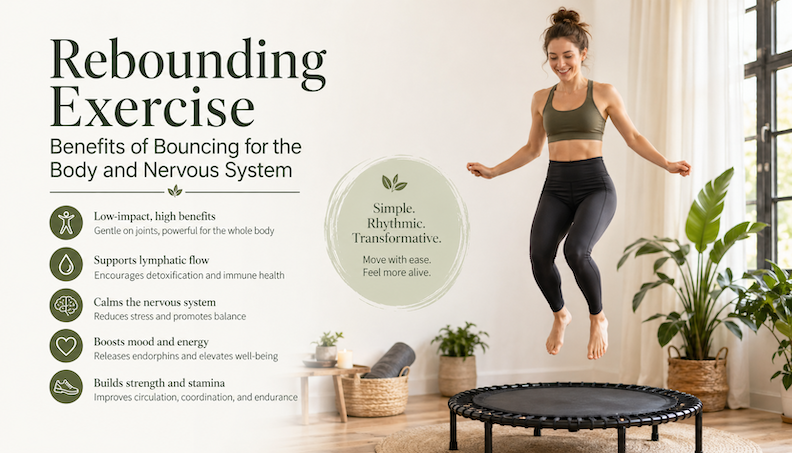
Benefits of Bouncing for the Body and Nervous System
Rebounding is a simple yet deeply effective form of movement that invites the body back into rhythm. Performed on a small trampoline—often called a rebounder—it involves gentle bouncing, controlled motion, or low-impact jumping. While it may appear playful on the surface, rebounding is a powerful practice that supports physical vitality, nervous system balance, and overall well-being.
What Is Rebounding?
Rebounding is a low-impact exercise method that uses a mini trampoline to create repeated, controlled movements. These movements can vary widely depending on the intention and energy level of the individual. At its most gentle, rebounding can involve light, slow bouncing where the feet never leave the mat. This style is often used for relaxation, lymphatic stimulation, and nervous system support.
At the other end of the spectrum, rebounding can become more dynamic, incorporating cardio-style movement such as jogging in place, jumping jacks, or higher-intensity bouncing. This versatility makes it accessible for beginners while still offering depth and challenge for more experienced practitioners.
39 Inch Fitness Trampoline Workout Rebounder with Handlebar
A large jumping surface and extra-wide padded mat making it great for low impact cardio, core exercises, high-calorie burns, lymphatic flow, and so much more

The Physical Benefits of Rebounding
One of the most well-known benefits of rebounding is its ability to provide a full-body workout without placing excessive stress on the joints. Unlike running on hard surfaces, the rebounder absorbs impact, reducing strain on the knees, hips, and spine. This makes it an ideal option for those recovering from injury, managing chronic pain, or seeking a gentler approach to fitness.
Rebounding also supports cardiovascular health. Even light bouncing increases heart rate, improves circulation, and enhances oxygen flow throughout the body. Over time, this can contribute to improved endurance and heart function.
Another key benefit is its effect on the lymphatic system. The up-and-down motion of rebounding creates a pumping action that encourages lymph flow, helping the body eliminate toxins and waste more efficiently. Since the lymphatic system does not have its own pump like the heart, this kind of movement plays a crucial role in maintaining immune health.
Muscle engagement is another important aspect. Rebounding activates the core, legs, and stabilizing muscles as the body works to maintain balance and control. This leads to improved coordination, strength, and posture over time.
Rebounding and the Nervous System
Beyond its physical benefits, rebounding has a profound impact on the nervous system. The rhythmic, repetitive motion of bouncing can be deeply regulating, helping to shift the body out of states of stress and into a more balanced, grounded state.
Gentle rebounding in particular can stimulate the parasympathetic nervous system, often referred to as the “rest and restore” mode. This can lead to reduced anxiety, improved mood, and a greater sense of calm. The predictable, rhythmic nature of the movement also provides a form of sensory input that can be soothing for the brain.
For those who experience chronic stress or nervous system dysregulation, rebounding offers a way to reconnect with the body in a safe and supportive manner. It encourages awareness of breath, movement, and internal sensation, creating a bridge between physical activity and mindful presence.
At higher intensities, rebounding can also help release built-up tension and energy. This can be especially beneficial for those who feel restless, overwhelmed, or mentally fatigued. The act of bouncing becomes a way to discharge stress while still maintaining a sense of control and stability.
Hormonal and Emotional Balance
Rebounding can also influence hormonal balance. Physical movement stimulates the release of endorphins, often called “feel-good” hormones, which can elevate mood and reduce feelings of depression. The gentle nature of rebounding means these benefits can be accessed without overexertion or burnout.
Additionally, the playful quality of bouncing can reconnect individuals with a sense of joy and lightness. This emotional shift is not insignificant—it can help break cycles of heaviness and bring a renewed sense of energy into daily life.
Rebounding as a Mind-Body Practice
While rebounding can certainly be used as a fitness tool, it also holds space as a mind-body practice. When approached with intention, it becomes more than just exercise—it becomes a form of moving meditation.
Focusing on breath while bouncing, noticing the rhythm of the body, and allowing thoughts to settle can transform a simple session into a grounding ritual. This aligns with a more holistic approach to wellness, where movement is not just about physical output, but about connection and integration.
This perspective invites a slower, more conscious relationship with exercise—one that honors the body’s needs and supports long-term well-being rather than short-term results.
How to Begin a Rebounding Practice
Starting a rebounding practice does not require advanced skill or experience. In fact, beginning with gentle movement is often the most beneficial approach. Standing on the rebounder and allowing the body to experience small, controlled bounces can be enough to initiate the benefits.
Consistency is more important than intensity. Even a few minutes of daily rebounding can support circulation, lymph flow, and nervous system regulation. Over time, movement can be adapted to include more dynamic exercises if desired.
Listening to the body is essential. Rebounding should feel supportive, not straining. Adjusting pace, depth of bounce, and duration allows the practice to remain sustainable and aligned with individual needs.
About Us and Our Approach to Rebounding
At Still Alchemy, movement is seen as a pathway to deeper awareness and transformation. Rebounding aligns with this philosophy by offering a practice that is both gentle and powerful, simple yet deeply impactful.
Rather than focusing solely on external results, the emphasis is placed on how movement feels within the body. Rebounding becomes a tool for tuning into internal rhythms, releasing tension, and cultivating balance within the nervous system.
This approach recognizes that true wellness is not achieved through force or intensity, but through consistency, presence, and care. Rebounding fits naturally into this framework, providing a practice that can be adapted to different energy levels, intentions, and stages of life.
By integrating rebounding into a broader lifestyle of mindful movement and self-awareness, it becomes more than exercise—it becomes part of a holistic journey toward balance and vitality.
Rebounding offers a unique blend of physical, neurological, and emotional benefits. Its low-impact nature makes it accessible, while its rhythmic movement supports both the body and the nervous system in profound ways.
Whether practiced gently for relaxation or more actively for cardiovascular health, rebounding invites a return to natural movement patterns that nourish and restore. It is a reminder that sometimes the most effective practices are also the simplest—rooted in rhythm, consistency, and connection to the body.
You must be logged in to post a comment.