
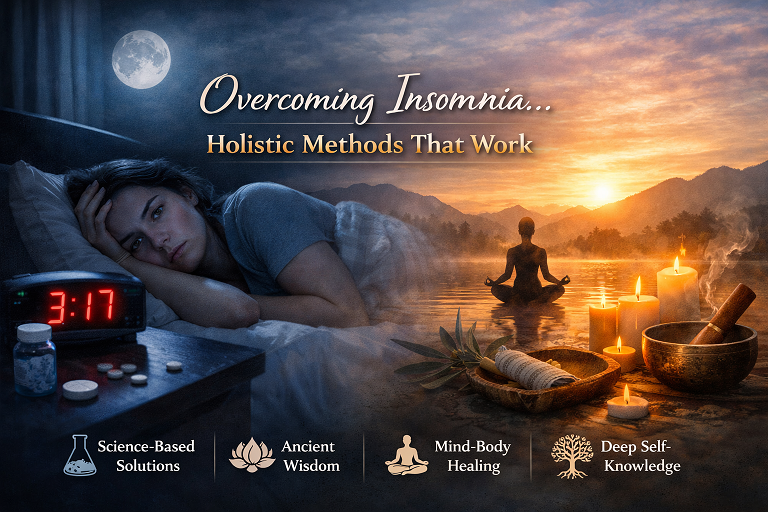
Holistic Methods That Work
There is a particular kind of exhaustion that comes not just from a single sleepless night, but from months or years of lying awake in the dark, watching the clock, negotiating with a restless mind. If this sounds familiar, you are far from alone. According to the American Sleep Association, between 50 and 70 million adults in the United States experience some form of sleep disorder, with insomnia being the most commonly reported. And yet, the answer so many people reach for — sleeping pills — often creates its own problems: grogginess, dependency, and a nervous system that never truly learns to rest.
At Still Alchemy, we believe that sleep is not a problem to be suppressed with medication — it is a signal, an invitation to understand what the body, mind, and spirit are trying to communicate. True rest is not something you force. It is something you allow, something you cultivate through the slow, intentional alchemy of transformation. In this guide, we offer a comprehensive look at the holistic methods that genuinely restore sleep — methods rooted in science, ancient wisdom, and the kind of deep self-knowledge that changes everything.
Understanding Why You Cannot Sleep: The Root Causes
Before we explore solutions, we must first understand the terrain. Poor sleep is rarely a standalone problem. More often, it is a symptom — a downstream effect of something happening in the body’s systems. Common root causes include chronic stress and elevated cortisol, circadian rhythm disruption, nutritional deficiencies, unresolved emotional or psychological patterns, overstimulation of the nervous system, gut-brain axis imbalance, hormonal fluctuations (especially in perimenopause and menopause), and environmental factors like light pollution and electromagnetic exposure.
The holistic approach does not suppress these signals. It listens to them. It asks: what is the body trying to protect itself from? What has the mind not yet been given space to process? Once we start asking these deeper questions, sleep often begins to improve almost naturally — because the system is no longer fighting itself.
Circadian Rhythm Reset: Aligning with Natural Light
The human body runs on a roughly 24-hour internal clock — the circadian rhythm — that governs when we feel alert and when we feel sleepy. This clock is primarily set by light exposure, specifically the wavelength and intensity of light that enters through the eyes and registers in a part of the brain called the suprachiasmatic nucleus (SCN).
To reset and strengthen your circadian rhythm naturally:
- Get outside within 30 minutes of waking. Morning sunlight — even on cloudy days — signals the brain that the day has begun and sets the countdown for melatonin release roughly 12 to 14 hours later.
- Reduce blue light exposure in the evening. Blue light from screens suppresses melatonin production. Use blue light-blocking glasses or enable night mode on devices from sunset onward.
- Keep consistent sleep and wake times, including on weekends. Irregular schedules disrupt the circadian clock more than most people realize.
- Create a dark sleep environment. Blackout curtains, eye masks, and removing all ambient light sources from the bedroom can significantly improve melatonin production and sleep depth.
Chronobiology research from institutions like the Salk Institute has demonstrated that living in sync with our natural light-dark cycle not only improves sleep quality but also has positive cascading effects on metabolism, immune function, and mental health.
The Nervous System: Downregulating from Fight-or-Flight
One of the most overlooked contributors to chronic insomnia is a dysregulated autonomic nervous system — a body that is stuck in a low-grade state of alert. When the sympathetic nervous system (the fight-or-flight response) is chronically activated, the body does not feel safe enough to enter the deep rest of sleep. Cortisol and adrenaline remain elevated. The heart rate stays high. Thoughts race. No matter how tired you are, something in the system says: not yet.
Breathwork for Sleep
Breathwork is one of the most powerful and underutilized tools for nervous system regulation. The breath is the only autonomic function we can consciously control, making it a direct pathway into the body’s regulatory system. Several breathing techniques have been shown in research to activate the parasympathetic (rest-and-digest) nervous system:
- 4-7-8 Breathing: Inhale for 4 counts, hold for 7, exhale slowly for 8. The extended exhale activates the vagus nerve and triggers a relaxation response.
- Box Breathing (4-4-4-4): Used by Navy SEALs and performance athletes to regulate stress responses. Equally effective as a pre-sleep practice.
- Coherent Breathing: Inhaling and exhaling at a rate of about 5 breaths per minute, which creates heart rate variability coherence — a measurable marker of nervous system balance.
Progressive Muscle Relaxation (PMR)
PMR is a well-researched technique that involves systematically tensing and releasing muscle groups throughout the body. A 2015 meta-analysis published in Sleep Medicine Reviews found PMR to be significantly effective in reducing insomnia symptoms, particularly when combined with other cognitive-behavioral approaches. By creating a contrast between tension and release, the body learns — physically and somatically — what it feels like to let go.
Sleep Hygiene: Beyond the Basics
You have likely heard about sleep hygiene — limiting caffeine, keeping a regular schedule, avoiding screens before bed. These are foundational, and they matter. But sleep hygiene in the holistic sense goes deeper, addressing not just habits but the energy and intention of your sleep environment.
Caffeine and Stimulant Awareness
Caffeine has a half-life of approximately 5 to 7 hours in most people, though genetic variants in the CYP1A2 enzyme mean that slow metabolizers can still feel its effects up to 10 to 12 hours later. If you are drinking coffee at noon and struggling to fall asleep at 11 PM, there is a biochemical connection that cannot be ignored. The same applies to less obvious stimulants: green tea, matcha, dark chocolate, certain pre-workout supplements, and even some herbal blends.
Temperature Regulation
Core body temperature naturally drops by 1 to 2 degrees Fahrenheit in the first stage of sleep, signaling the body to transition into deeper stages. You can support this process by keeping the bedroom cool (ideally between 65 and 68 degrees Fahrenheit), taking a warm bath or shower 1 to 2 hours before bed — the contrast between the warm bath and the cooler air accelerates the drop in core temperature — and using breathable, natural fiber bedding such as cotton, linen, or bamboo.
Creating a Sacred Sleep Environment
This is where the holistic approach adds something conventional sleep hygiene does not: the concept of intentional space. The bedroom should feel like a sanctuary — a place the nervous system associates with safety, rest, and renewal. This means removing work materials, decluttering surfaces, using calming scents, keeping technology out of the room, and curating an atmosphere that communicates to every sensory system: it is safe to rest here.
Nutrition and Sleep: What You Eat Changes How You Sleep
The relationship between nutrition and sleep is bidirectional and profound. Poor sleep increases cravings for high-sugar, high-fat foods; and a poor diet, in turn, fragments sleep architecture. Here is what the research says about specific nutritional influences on sleep quality.
Magnesium: The Great Relaxation Mineral
Magnesium is involved in over 300 enzymatic processes in the body, including those that regulate the neurotransmitter GABA — the primary inhibitory chemical that quiets neural activity and prepares the brain for sleep. Studies estimate that up to 75% of Americans do not meet the recommended daily intake of magnesium. Supplementing with magnesium glycinate or magnesium threonate (which crosses the blood-brain barrier) before bed has been shown in multiple clinical trials to improve sleep onset, sleep duration, and morning alertness. Food sources rich in magnesium include dark leafy greens, pumpkin seeds, almonds, dark chocolate, and legumes.
Tryptophan, Serotonin, and Melatonin Precursors
Melatonin is not a nutrient — it is a hormone synthesized by the pineal gland from the amino acid tryptophan, via serotonin. This means that adequate tryptophan intake and serotonin production are essential for robust melatonin signaling. Tryptophan-rich foods include turkey, eggs, dairy, oats, bananas, pumpkin seeds, and tofu. Consuming them alongside a small amount of carbohydrate in the evening helps shuttle tryptophan across the blood-brain barrier more efficiently. Additionally, vitamin B6, zinc, and folate are co-factors required for the conversion of tryptophan to serotonin — deficiencies in any of these can impair the entire pathway.
The Gut-Brain-Sleep Connection
Approximately 90% of the body’s serotonin is produced in the gut — not the brain. The gut microbiome directly influences the production of sleep-regulating neurotransmitters, making gut health a foundational component of sleep health. Fermented foods like kefir, kimchi, sauerkraut, and live-culture yogurt support a diverse microbiome. Prebiotic fibers (found in garlic, onions, leeks, and oats) feed the beneficial bacteria that produce GABA and short-chain fatty acids that reduce systemic inflammation — itself a well-documented disruptor of sleep.
Movement and the Body: Exercise as Sleep Medicine
Regular physical activity is one of the most evidence-backed non-pharmacological interventions for sleep disorders. A 2017 meta-analysis published in Advances in Preventive Medicine analyzed 34 studies and found that exercise significantly improved sleep quality, total sleep time, and sleep onset latency, particularly in individuals with chronic insomnia. However, the type, timing, and intensity of exercise all matter.
- Morning or early afternoon exercise is ideal for supporting circadian alignment and building sleep pressure (adenosine buildup) throughout the day.
- Vigorous cardio within 2 to 3 hours of bedtime can elevate core temperature and adrenaline in ways that delay sleep onset for sensitive individuals.
- Yoga and yin yoga, on the other hand, are excellent evening practices. Research from Harvard Medical School found that daily yoga practice improved sleep quality in older adults with chronic insomnia after just 8 weeks.
- Walking in nature (forest bathing or shinrin-yoku) combines gentle movement with phytoncide exposure, light regulation, and nervous system downregulation — a trifecta for better sleep.
Herbal Medicine and Adaptogens: Nature’s Sleep Allies
Long before pharmaceutical sleep aids, human beings used plants to encourage rest. Many of these botanicals have now been validated by modern clinical research. Used thoughtfully, they can be powerful allies — not as crutches, but as tools that support the body’s own regulatory systems.
Ashwagandha (Withania somnifera)
One of Ayurveda’s most revered adaptogenic herbs, ashwagandha has been studied extensively for its effects on the hypothalamic-pituitary-adrenal (HPA) axis — the stress response system. A randomized, double-blind, placebo-controlled trial published in the journal Medicine in 2019 found that 600 mg of ashwagandha root extract daily significantly improved sleep quality, sleep onset latency, and morning alertness in adults with insomnia. Its active compounds, withanolides, appear to reduce cortisol and increase GABAergic activity.
Valerian Root (Valeriana officinalis)
Valerian has been used as a sleep and anxiety remedy since ancient Greece and Rome. Its compounds — valerenic acid and isovaleric acid — modulate GABA receptors similarly to benzodiazepine drugs, but without the same dependency risks. Multiple meta-analyses have found valerian root to improve subjective sleep quality, particularly in women experiencing menopausal sleep disruption.
Passionflower, Lemon Balm, and Chamomile
Passionflower (Passiflora incarnata) has demonstrated anxiolytic and sleep-promoting effects in human trials, particularly for generalized anxiety-related insomnia. Lemon balm (Melissa officinalis) reduces nervous system hyperactivity and has synergistic effects when combined with valerian. Chamomile contains apigenin — a flavonoid that binds to GABA receptors and has been shown to reduce time to sleep onset in postpartum women and older adults.
Reishi Mushroom (Ganoderma lucidum)
Often called the “mushroom of immortality” in traditional Chinese medicine, reishi has documented immunomodulatory and sedative properties. A study published in Pharmacology, Biochemistry and Behavior found that reishi extract significantly increased total sleep time and non-REM sleep. Its primary active compounds, triterpenes and polysaccharides, are thought to act on the central nervous system to induce calm alertness that transitions naturally into rest.
Mindfulness, Meditation, and the Quiet Mind
The racing mind at 2 AM is one of the most reported and most distressing features of insomnia. Mindfulness-based practices directly address this by training the default mode network — the brain’s background chatter — to settle. This is not about forcing the mind to be blank; it is about developing a different relationship with thought.
Mindfulness-Based Therapy for Insomnia (MBTI)
Adapted from the well-established Mindfulness-Based Stress Reduction (MBSR) program developed at the University of Massachusetts, MBTI has been shown in research published in JAMA Internal Medicine to produce improvements in sleep quality that are comparable to — and in some areas superior to — those produced by pharmacological treatment, with effects that persist longer after treatment ends. Mindfulness addresses the hyperarousal and cognitive intrusion that perpetuate insomnia at the neurological level.
Body Scan Meditation
A body scan meditation — systematically bringing gentle, non-judgmental awareness to each part of the body — is particularly effective for sleep because it draws attention away from thought and into somatic experience. This is a practice of coming home to the body. Studies using neuroimaging have shown that body scan practice reduces amygdala reactivity — the alarm center of the brain — making it an especially powerful tool for those whose insomnia is rooted in anxiety.
Yoga Nidra: The Sleep of the Yogis
Yoga Nidra (meaning “yogic sleep”) is a guided meditation practice that induces the hypnagogic state — the threshold between waking and sleeping — as a deliberate, healing practice. EEG studies show that yoga nidra produces theta brain waves associated with deep relaxation and the early stages of sleep, while maintaining a thread of conscious awareness. Practitioners often report that 45 minutes of yoga nidra feels as restorative as several hours of sleep. It is increasingly used in clinical settings for PTSD, chronic pain, and anxiety-related insomnia.
Aromatherapy and the Olfactory-Sleep Connection
The olfactory system has a direct anatomical connection to the limbic system — the emotional and memory processing center of the brain — bypassing the cortex in a way that no other sense does. This is why scent can shift emotional and physiological states almost instantaneously. Several essential oils have been clinically studied for their effects on sleep:
- Lavender (Lavandula angustifolia): The most extensively researched sleep-supporting essential oil. Studies show it reduces heart rate and blood pressure, increases slow-wave (deep) sleep, and improves sleep quality scores. A 2015 study in the Journal of Alternative and Complementary Medicine found that lavender aromatherapy significantly improved sleep quality in college students.
- Roman Chamomile: Calming to the central nervous system, particularly effective for anxiety-driven insomnia.
- Cedarwood: Contains cedrol, a naturally sedative sesquiterpene that has been shown to decrease locomotor activity and induce sleep in both animal and human studies.
- Vetiver and Sandalwood: Deeply grounding oils with earthy, rooty base notes that work on the body’s felt sense of safety — a quality that goes beyond biochemistry into the more subtle dimensions of rest.
Use these oils in a diffuser 30 to 60 minutes before bed, diluted in a carrier oil for a chest or foot massage, or added to an unscented pillow spray. The ritual itself — the act of intentionally preparing your sleep environment — reinforces sleep associations in the brain, which compounds the biochemical effect over time.
Acupuncture, Sound Healing, and Energy Medicine
Beyond the well-researched tools above, a growing body of evidence supports several modalities from traditional and energy medicine as effective approaches to sleep restoration.
Acupuncture
Acupuncture has been used in Traditional Chinese Medicine for sleep disorders for over 2,000 years. A 2019 systematic review and meta-analysis published in Evidence-Based Complementary and Alternative Medicine, examining 30 randomized controlled trials, found that acupuncture significantly improved total sleep time and sleep efficiency compared to control groups. It is thought to work by modulating the neuroendocrine system — specifically regulating melatonin, serotonin, beta-endorphins, and GABA.
Sound Healing and Binaural Beats
Sound healing — particularly through crystal singing bowls and gong baths — creates acoustic vibrations that entrain the nervous system toward slower, more coherent brain wave patterns. When two tones of slightly different frequencies are presented to each ear through headphones, the brain generates a third tone (the binaural beat) at the difference frequency. Delta binaural beats (1 to 4 Hz) correspond to deep sleep brain waves and have been shown in studies to increase the proportion of delta-wave sleep when used consistently. Theta beats (4 to 8 Hz) support the hypnagogic threshold and are ideal for sleep onset.
Earthing and Grounding
Emerging research on earthing — the practice of making direct physical contact with the earth’s surface — suggests it reduces cortisol, decreases systemic inflammation, and normalizes circadian cortisol rhythms in ways that directly support sleep. A pilot study published in the Journal of Alternative and Complementary Medicine found that subjects who slept grounded experienced improved cortisol profiles and reported less pain, stress, and improved sleep quality. The biological plausibility — grounding dissipates static electricity and connects the body to the earth’s natural electromagnetic field — is supported by established physics and physiology.
Emotional Processing: The Sleep No One Talks About
There is a dimension of sleep disruption that holistic health takes seriously but conventional medicine rarely addresses: the unprocessed emotional and psychological material that surfaces in the quiet of night. Sleep is not merely a physiological function — it is a time of integration, consolidation, and cellular repair. When we have experiences that have not been fully felt, witnessed, or metabolized, they often resurface in the form of racing thoughts, nightmares, or early-morning waking.
Somatic therapies — such as Somatic Experiencing (SE), EMDR (Eye Movement Desensitization and Reprocessing), and trauma-sensitive yoga — address trauma held in the body rather than purely in the narrative mind. These approaches have shown strong results in improving sleep for individuals with PTSD, complex trauma, and anxiety disorders. Journaling before bed — specifically expressive writing about emotional concerns and then setting them aside — has been demonstrated in research to reduce pre-sleep cognitive arousal. Gratitude journaling, which shifts attention toward positive memories and experiences before sleep, activates different neurological circuits and has been shown to improve sleep quality and reduce depressive symptoms.
Cognitive Behavioral Therapy for Insomnia (CBT-I): The Gold Standard of Natural Treatment
The American College of Physicians, the American Academy of Sleep Medicine, and the American College of Sleep Medicine all recommend CBT-I as the first-line treatment for chronic insomnia — over and above sleep medication. It is a structured, multi-component behavioral and psychological program that addresses the thoughts, behaviors, and physiological patterns that perpetuate insomnia. Core components include:
- Sleep restriction therapy: Temporarily limiting time in bed to match actual sleep time, building sleep pressure and consolidating fragmented sleep patterns.
- Stimulus control: Rebuilding the brain’s association between the bedroom and sleep, rather than wakefulness, anxiety, or screen time.
- Cognitive restructuring: Identifying and challenging catastrophic sleep-related thoughts — “I will never sleep again,” “I need 8 perfect hours or I cannot function” — that amplify arousal.
- Sleep hygiene education and relaxation training, integrated within a personalized protocol.
CBT-I has remission rates of 70 to 80% for chronic insomnia. When integrated with the somatic, nutritional, and lifestyle practices described in this guide, results can be transformative.
Still Alchemy and the Path to Deep Rest
At Still Alchemy, we understand that true healing — including sleep — emerges not from force but from stillness. Our name holds the philosophy: Still, as in the practice of arriving in the present moment; Alchemy, as in the profound transformation that becomes possible when we stop fighting our own nature and begin working with it. Sleep, in this framework, is not a task to perform or a problem to eliminate. It is a relationship — a daily practice of trust between the self and the body, between consciousness and the unconscious, between waking and the mysterious intelligence of night.
Our approach to holistic well-being draws from the intersection of ancient wisdom traditions — Ayurveda, Traditional Chinese Medicine, shamanic practices, and contemplative spirituality — and the best of contemporary integrative medicine and neuroscience. We do not believe in one-size-fits-all solutions. We believe in you: in the intelligence of your body, the resilience of your nervous system, and the deep innate wisdom that knows how to rest, given the right conditions.
Whether you come to us through our guided meditations, our sound healing offerings, our holistic wellness resources, or simply through this article at 3 AM — we are here to walk alongside you on the path back to rest. Not as experts who have all the answers, but as fellow travelers who have sat in the dark and found the way back to the light, one slow breath at a time.
Your Holistic Sleep Protocol: Putting It All Together
The beauty of a holistic approach to sleep is that every intervention supports the others. Light exposure reinforces the circadian rhythm; a regulated nervous system produces melatonin more consistently; magnesium supports GABA activity; herbal adaptogens lower cortisol; breathwork deepens relaxation; mindfulness reduces cognitive hyperarousal; emotional processing removes subterranean resistance. These are not separate treatments — they are threads in the same living fabric.
A suggested starting protocol:
- Morning: Get outdoor light within 30 minutes of waking. Move your body for at least 20 to 30 minutes.
- Afternoon: Limit caffeine after 12 PM. Consider a 10 to 20 minute restorative movement or breathing practice.
- Evening: Dim all lights and reduce screen exposure from sunset. Prepare a calming herbal tea. Begin a journaling or gratitude practice.
- Pre-sleep: Take a warm bath or shower. Diffuse lavender or cedarwood essential oil. Practice 4-7-8 breathing or a body scan meditation for 10 to 20 minutes. Consider magnesium glycinate if indicated.
- In bed: Use yoga nidra or a binaural beats recording. If your mind races, keep a notepad beside the bed to offload thoughts and return to the breath.
Give this protocol at least four to six weeks of consistent practice. Sleep transformation, like all genuine alchemy, takes time. It requires patience, self-compassion, and the willingness to show up for yourself in small, consistent ways. But those who do — who commit to listening to the body rather than fighting it — almost always find their way back to rest.
Reclaiming the Night
Sleep is one of the most fundamental expressions of trust — trust in the body, trust in the world, trust in the night itself. When that trust is broken, it can feel as though something essential has been taken from you. But the good news — the genuinely remarkable news — is that the body always wants to heal. The nervous system is not broken; it is protective. The mind that races is not your enemy; it is trying to solve a problem that needs a different kind of attention.
Holistic sleep practices work because they meet the body where it is. They do not override the nervous system — they befriend it. They do not silence the mind — they give it what it needs to quiet on its own. And they do not force sleep — they create the conditions in which sleep becomes the natural, inevitable outcome of a system at peace.
The night is not something to survive. It is something to return to — rich, restorative, and yours.
You must be logged in to post a comment.